
Tattoo styles explained: a guide to the main styles, and how to choose yours
Knowing what a style is called is how you find the right artist. Here are the main families, what sets each apart, and what each asks of size, placement and time.
People have been tattooed for at least 5,300 years: Ötzi, the iceman found in the Alps, carries 61 tattoos, most of them short black lines. Today's styles are far younger, and there are hundreds of names for them — the style catalog in INKterest has 250 categories, and only 111 of them are styles in the strict sense; the rest are themes, effects, techniques, palettes, formats and umbrella terms. You don't need them all. Most fall into a handful of families, and knowing which family your favourite pictures belong to is the quickest way to find an artist who does that kind of work well.
The example designs below come from that catalog.
All 250, sorted by kind and with sources, are in the full list.
Traditional and its descendants
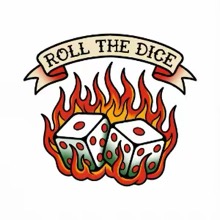
American Traditional (Old School)
Bold black outlines, a small palette — red, yellow, green and black — and little shading. Swallows, anchors, roses, daggers, panthers and pin-ups, drawn flat and easy to read. Its most famous name is Norman “Sailor Jerry” Collins, who settled in Honolulu in the 1930s and tattooed there for decades; he died in 1973.
Good to know · It reads from across the room and works at small sizes, and artists widely count it among the styles that age best.
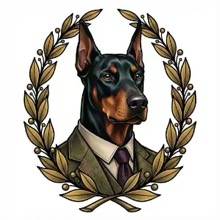
Neo-Traditional
Traditional's richer descendant: the same strong outlines, but with varied line weight, more depth and a wider palette of deep, jewel-like colours. Animals, flowers, faces and ornamental frames.
Good to know · It needs a little more room than traditional to show its detail.
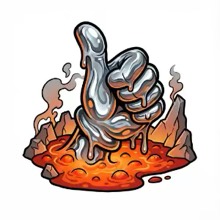
New School and anime
Cartoon energy: exaggerated shapes, thick outlines, saturated colour and a sense of humour. Anime and manga pieces borrow the same graphic language from Japanese animation and comics.
Good to know · Bright colour stays bright longest out of the sun — plan on sunscreen if it will be on show.
Japanese
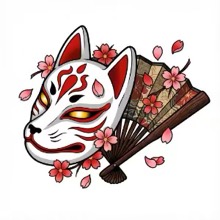
Japanese (Irezumi)
Dragons, koi, tigers, Hannya masks and legendary heroes, set against wind bars, clouds or waves that tie a whole piece together. Large, full-body tattooing became fashionable in Japan in the late 1820s, as Utagawa Kuniyoshi's woodblock prints of the tattooed heroes of the Water Margin circulated, according to Sarah Thompson of the Museum of Fine Arts, Boston — though whether the prints started the fashion or followed it is still debated.
Good to know · It is made for large areas — a sleeve, a back, a leg — and built over many sessions, so plan the whole piece with the artist from the start. Black-and-grey versions exist too.
Living traditions
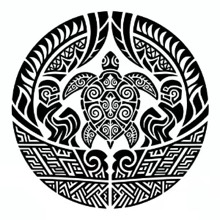
Polynesian and Māori
Bold black patterns from the Pacific — lines, triangles, waves — that carry meaning in the cultures they come from. The English word itself started here: on Tahiti in 1769, Captain Cook wrote that islanders marked their bodies, “Tattow, as it is called in their Language”. In Aotearoa New Zealand, Māori developed their own form, tā moko, cut with narrow chisels called uhi; disrupted by colonisation in the 19th century, it has been revived — with help, Te Papa notes, from Samoan tattooists.
Good to know · These are living cultural practices, not just patterns. Look for an artist from, or trained in, the tradition, who can design something that is right for you to wear. A Māori-inspired design made for someone who isn't Māori has a name of its own: kirituhi.
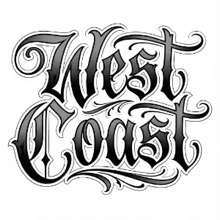
Chicano
Fine lines, smooth black-and-grey shading, script lettering and imagery from Mexican-American life in Los Angeles. It grew in California prisons, where homemade machines had a single needle. In the mid-1970s, NPR recounts, Good Time Charlie's Tattooland in East Los Angeles switched its machines to a single needle so clients could have the same look in a studio — and black and grey grew from there into one of tattooing's most popular styles.
Good to know · Chicano lettering is an art of its own: ask to see the artist's script.
Black and grey, and realism
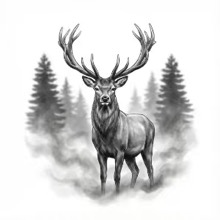
Black and Grey (Grey Wash)
Black ink only, diluted into a whole range of greys for soft gradients and smoky shadows — the look of a charcoal drawing or a black-and-white photograph. Strictly, it is a palette plus a way of shading — grey wash — rather than a style of its own, and other styles are done in it: Chicano, realism, Japanese.
Good to know · Softer than solid black, so it needs enough size for the greys to read, and sun protection to keep them.
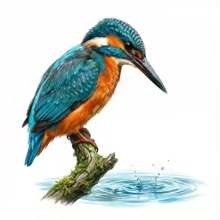
Realism (black and grey or colour)
The aim is a photograph on skin — portraits, animals, nature — usually without hard outlines, built from shading and contrast alone.
Good to know · The most technically demanding style, especially for portraits of a real person. Choose an artist with healed realism in their portfolio, and give it room: detail needs size.
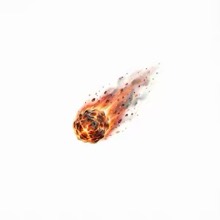
Micro Realism
Realism shrunk to the size of a coin: a pet, a landscape, a famous painting, done with the finest needles.
Good to know · Stunning when fresh, but with so much detail in so little space it is a style many artists are cautious about over the long run — our guide to placement and size explains why.
Bold black

Blackwork
A style defined by solid black alone, with many sub-styles — from ornamental and tribal patterns to bold graphic illustration — that use areas of black and bare skin instead of soft greys.
Good to know · High contrast that reads from a distance. At its most extreme, “blackout” fills whole areas in solid black, often to cover old tattoos.
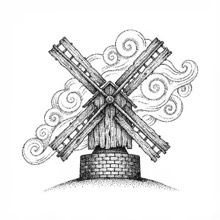
Dotwork (Stippling)
Images built from thousands of dots — packed close for shadow, spread out for light. Often used for mandalas, geometry and softly shaded illustration. It is a technique used inside other styles as well as a style of its own.
Good to know · Slow to tattoo, so sessions run long for the size.
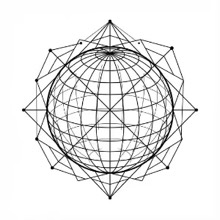
Geometric
Lines, circles, triangles and polygons — sacred geometry, repeating patterns and faceted “low-poly” animals.
Good to know · Straight lines and perfect circles have to sit on a curved body that moves. Try it on the exact spot to see how it bends.
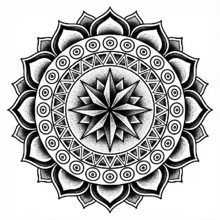
Mandala and Ornamental
Decoration for its own sake: symmetrical mandalas, lace, jewellery-like motifs and flourishes that follow the body's curves — the sternum, the spine, shoulders, hips. Strictly, the mandala is a motif, most often done in ornamental or dotwork style.
Good to know · Symmetry is unforgiving: placement has to be centred exactly, which is worth checking before the stencil goes on.
Fine and minimal
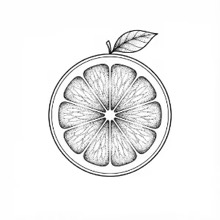
Fine Line and Single Needle
Thin lines and delicate shading made with very fine needles — flowers, script, small portraits, constellations. Light and elegant, like a pencil sketch. Fine line grew out of single-needle work in Los Angeles (Mark Mahoney, Dr. Woo); single needle itself is a technique, and not every fine-line tattoo is made with one needle.
Good to know · There is little long-term research on how fine-line work ages; artists advise against shrinking detail too far, and keeping it out of the sun.
Minimalism and tiny tattoos
A few clean lines or a simple shape — a wave, a mountain, a small symbol. Small, discreet and easy to cover. Tiny, though, is a size rather than a style: work in any style can be small.
Good to know · Small isn't always cheap: studios have minimum charges. See how tattoo prices are built.
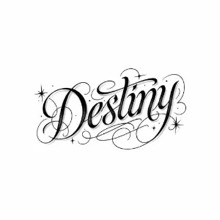
Lettering and Script
Words, names and dates. Lettering is content rather than a style; the style is in the letterforms — from flowing script and calligraphy to typewriter, gothic “Old English” and Chicano lettering.
Good to know · Check the spelling letter by letter, and keep letters big enough — artists warn that tight lettering is among the first details to blur.
Painterly and graphic
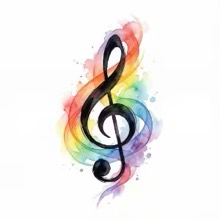
Watercolour
Soft washes, bleeds and splashes of colour that look painted with a brush, often with few or no black outlines.
Good to know · Artists disagree on how outline-free colour holds up over the years, and many anchor it with some black. Ask to see healed watercolour work, and protect it from the sun.
Illustrative
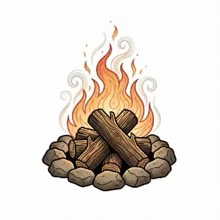
A broad family of drawn looks — sketch lines, engraving-style hatching, woodcut, comic book — anything that looks like an illustration rather than a photograph.
Good to know · Because it covers so much, look at an artist's own drawing style, not just the label.
Trash Polka
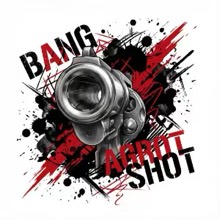
Realistic images collaged with bold black and red strokes, splatters and typography — the signature style of Volko Merschky and Simone Pfaff of the Buena Vista Tattoo Club in Würzburg, Germany, since 1998.
Good to know · Big and expressive by nature; it works best as a large piece planned as a whole.
How to choose yours
- Collect first, name it later. Save every tattoo that stops you scrolling, without overthinking. After twenty or thirty, a pattern shows up — and this guide gives it a name.
- Find an artist who specialises. Most artists are known for one or two styles. Search by the style's name, pick someone whose portfolio is mostly that style, and ask for photos of healed work, not just fresh pieces.
- Let the style set the size and spot. Japanese, realism and trash polka want space; traditional and blackwork read small and from a distance; fine line and micro realism need restraint. More in our guide to placement and size.
- Classic or trend — choose meaning. Styles come and go. In the research, tattoos made in remembrance of someone or something were the least regretted — see who regrets a tattoo.
- Try the same idea in two styles. A rose in traditional and the same rose in fine line are different tattoos. Put both on your body and compare.
INKterest is built for that last step. Its built-in Pinterest browser is organised by about 250 tattoo styles and themes, from Old School to Woodcut, and any design you find goes straight onto your own body — live through the camera in 2D, or following your curves in 3D — while A vs B puts two versions side by side on the same photo. For words, Lettering sets a name, a date or a line in one of 59 tattoo fonts, to try on the same way. Before you get it done, see our guide to testing a tattoo before you get it.
- Samadelli M. et al. Complete mapping of the tattoos of the 5300-year-old Tyrolean Iceman. Journal of Cultural Heritage, 2015; 16(5): 753–758.
- Cook J. Captain Cook's Journal During His First Voyage Round the World (ed. W. J. L. Wharton, 1893), Tahiti, July 1769. Project Gutenberg.
- Tattoo Archive. Norman Keith Collins (“Sailor Jerry”).
- Ables K. How Japanese prints inspired a tattoo frenzy. CNN, 29 November 2019.
- Te Papa Tongarewa. Tāmoko: Māori tattoos — history, practice, and meanings.
- Meraji S. M. Black And Gray … And Brown: A Tattoo Style's Chicano Roots. NPR Code Switch, 15 April 2018.
- Buena Vista Tattoo Club, Würzburg. Trash Polka Tattoos by Volko Merschky & Simone Pfaff.
- INKterest style catalog: 250 categories — 111 styles, 73 themes, 38 effects, 11 techniques, 7 palettes, 4 formats and 6 umbrella terms — with descriptions, sources and example designs, November 2026.
Try a style on
INKterest is free to download for iPhone, with 9 free try-ons. INKterest Pro unlocks unlimited try-ons.