What tattoos mean: the history behind 17 of the most common symbols
Most lists of tattoo meanings start from a feeling and pin it on a picture. We started from the pictures: the main subject of each of the 25,000 designs in the INKterest catalog. Then we looked up where the meanings of the most common ones actually come from.
A symbol means what you and the people who see it read into it, and that has changed from one culture and century to the next. So below each one is its history: what it has stood for, where, and on whose authority — a museum, a historian, the text it comes from. Where the record is thin, we say so.
The most common subjects in 25,000 designs
The catalog's 25,000 or so designs were made with AI and then checked by hand. A person looked at every single one and threw out those with AI slips: octopuses with tentacles looped or cut off from the body, birds with three wings, spiders with more legs on one side than the other, snakes and Asian dragons tangled in their own bodies, and the like.
Every design in the INKterest catalog is tagged with what it shows, its main subject first. Leaving out the 682 designs that are lettering alone, these are the twenty subjects that most often take centre stage:
This counts what our catalog shows, not what people actually get tattooed — nobody has counted that. But the top of the list will be familiar to anyone who has leafed through a studio's flash.
Time and mortality
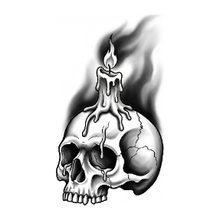
Skull
The plainest reminder that life ends. In European still lifes of the 1600s, skulls and burned-out candles were painted among books, wine and music to remind the viewer of their own mortality and of how little worldly pleasures are worth — the genre called vanitas. In Mexico, decorated skulls belong to the Day of the Dead, a festival of remembering the family's dead that UNESCO lists as intangible cultural heritage: there, a skull is closer to affection than to fear.
Good to know · One particular skull and crossbones, the SS Totenkopf, is a hate symbol — see the end of this article. Every other skull is not.
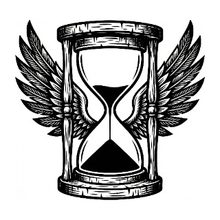
Hourglass
Sand running out is time running out. The hourglass belongs to the same family of reminders as the skull and often sits beside it; with wings, it says that time flies. Today it is just as often worn the other way round: as a reason not to waste the time you have.
Good to know · The sand needs room. In a small tattoo the grains and the glass are the first things to close up — see how tattoos age.
Love and devotion
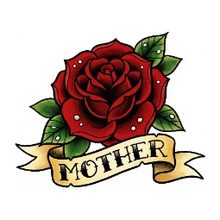
Rose
The flower of love in European tradition, and the most common flower in our catalog, ahead of the lotus. In American traditional flash it is often paired with a banner and a name — “Mother” is one of the classics — or with a dagger, a skull or a heart.
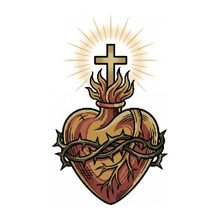
Sacred Heart
A heart in flames, ringed with thorns and topped with a cross is the Sacred Heart of Jesus, a Catholic devotion whose modern image follows the visions of the French nun Margaret Mary Alacoque between 1673 and 1675: the flames are love, the thorns and the wound are sacrifice (New Catholic Encyclopedia). It is everywhere in Mexican and Chicano art, and in a tattoo it can be a statement of faith, of heritage, or both.
Good to know · The anatomical heart — 141 designs in our catalog — is its secular cousin: the real organ, valves and all, usually meaning plain love or survival.
The watching eye
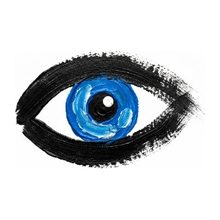
Eye
Three different eyes carry three different meanings. The Egyptian wedjat, the Eye of Horus, was worn as an amulet for protection and healing: in the myth the god Seth injured the eye and it was restored, and its healing power was thought to pass to the wearer (the Met). The Eye of Providence in a triangle, on the Great Seal of the United States since 1782, stands for providence watching over (U.S. State Department). And in Turkey, Greece and around the Mediterranean, a blue eye is a charm against the “evil eye”, the harm of an envious look.
Good to know · Which eye you mean is in the details — the triangle, the Egyptian brow and teardrop line, the blue rings. Tell your artist which one you want.
Change and rebirth
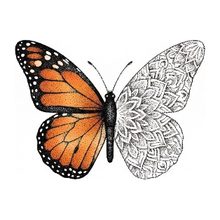
Butterfly
In Greek, psyche means both “soul” and “butterfly” (Smithsonian American Art Museum), and in Greco-Roman art the soul, Psyche, is drawn with butterfly wings. The change from caterpillar to wings adds the other meaning most people give it today: transformation.
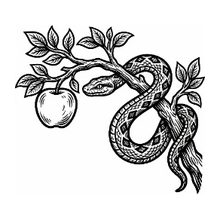
Snake
Few symbols mean more opposite things. A single snake coiled around a staff is the rod of Asclepius, the Greek god of healing, and it is still the emblem of medicine — it sits on the emblem of the World Health Organization. In the Garden of Eden the serpent is the tempter. A snake eating its own tail, the ouroboros, is the endless cycle; and the snake that sheds its skin stands for renewal.
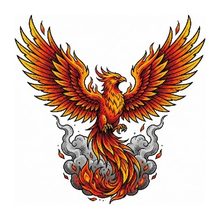
Phoenix
The bird that burns and rises again from its own ashes. Medieval Christian bestiaries read it as a figure of the Resurrection — the Aberdeen Bestiary, made in England around 1200, compares its return to Christ rising again. In a tattoo it almost always means coming back from something that nearly finished you.
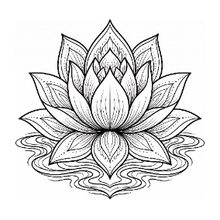
Lotus
The lotus grows out of mud and opens clean, and that is its meaning in Buddhism: the purity of the “Buddha-nature” within every living being, and enlightenment rising out of the dusty world (University of Michigan Museum of Art). In Hindu and Buddhist art, gods and the Buddha sit or stand on lotus flowers.
Good to know · Religious images can travel badly — see the note on Buddha images below.
Animals of myth
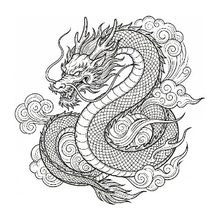
Dragon
East and West disagree. In China the dragon is arguably the best-known motif in art, tied to water, rain and rivers, and to protection, happiness and fertility (the Met); the five-clawed dragon was the emperor's (American Museum of Natural History). In European legend the dragon is the monster a hero slays, as in the story of Saint George.
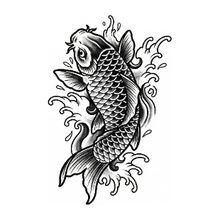
Koi
A Chinese legend has carp swimming up the Yellow River; the few that leap the falls at the Dragon Gate become dragons (Longmen). The carp climbing a waterfall became a byword for perseverance and success, and the koi became one of the great subjects of Japanese tattooing.
Good to know · Artists often say a koi swimming upstream is still fighting and one swimming down has made it. That reading is tattoo lore rather than part of the old legend.
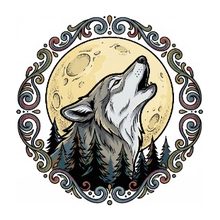
Wolf
Rome's founding legend has a she-wolf nursing the twins Romulus and Remus, and her bronze is still the symbol of the city. In Norse myth Odin keeps two wolves, Geri and Freki (Grímnismál). The meanings most people give a wolf tattoo today — the lone wolf, loyalty to the pack — are modern, not ancient.
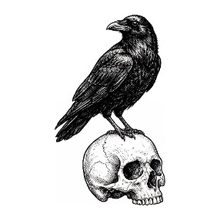
Raven
Odin's two ravens, Huginn and Muninn — usually translated “thought” and “memory” — fly over the world each day and bring him news (Grímnismál). In English the raven's reputation is darker: a bird of ill omen and, since Edgar Allan Poe's poem of 1845, of grief.
Good to know · A raven with a skull, like this one, pulls the design towards the memento mori side.
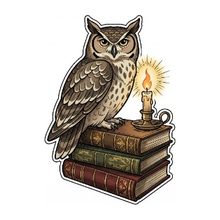
Owl
Athens put the owl of its goddess Athena on its silver coins — the “owls” of the ancient world — and the bird has stood for wisdom ever since (Museum of Fine Arts, Boston).
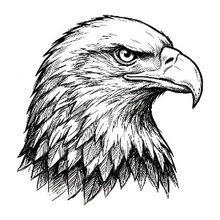
Eagle
Power, freedom and the state. Roman legions marched behind an eagle standard, and in 1782 the United States put a bald eagle on its Great Seal, holding arrows in one talon and an olive branch in the other — war and peace (U.S. State Department).
Sailors' flash
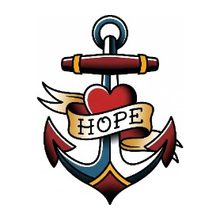
Anchor
For a sailor the anchor is the sea itself. For early Christians it was a symbol of hope, after the Letter to the Hebrews' “hope… as an anchor of the soul”, and it is found in the catacombs of Rome (Catholic Encyclopedia). Old-school flash often puts the two together: an anchor, a heart and the word HOPE.
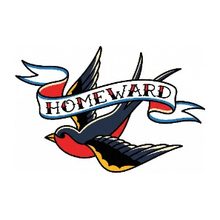
Swallow
A swallow — or a bluebird — on the chest marked 5,000 nautical miles at sea, and two marked twice that, according to the U.S. National Park Service's San Francisco Maritime park. Swallows come back to the same nesting places every year, so the bird is also read as a safe return home.
Good to know · The same sailors put a pig and a rooster on their feet, a superstition against drowning, and HOLD FAST across their knuckles.
Symbols that can say something you didn't mean
- Hate symbols. Some images have been taken over by extremists, and the reference most people use to check them is the ADL's Hate Symbols database. It lists, among others, one specific skull and crossbones adopted by the SS, the Totenkopf — not every skull, as the ADL stresses — the Nazi “black sun” wheel, the Othala rune, which it notes often appears as a tattoo, and number codes such as 88. Several Norse symbols, the valknot among them, have hateful uses alongside ordinary ones, and the ADL itself says context decides. If a design carries runes, find out what they spell and how they are used today.
- Sacred images abroad. In 2014 Sri Lanka deported a British tourist over a Buddha tattoo on her arm, although no law forbade it (NPR). Check before you travel with a religious image on show.
- Designs that belong to a people. Māori tā moko carries the wearer's ancestry and is not for outsiders; a Māori-inspired design made for someone else has its own name, kirituhi. Our guide to styles has more.
- Words in a script you can't read. Have a native speaker check them before the stencil goes on — not a translation app.
A meaning of your own
None of this is binding. Plenty of people get a wolf because they like wolves, and that is reason enough. The history matters for a different reason: a tattoo is read by other people for decades, and it helps to know what they may be reading.
The other thing that matters is how the symbol sits on you. The same snake can wrap a forearm or crawl along the ribs; the same anchor can be palm-sized or tiny. INKterest's catalog has thousands of designs with every subject above, in 250 styles — try them on your own body, in 2D or in 3D, before you decide.
- Tate. Vanitas (art term).
- UNESCO. Indigenous festivity dedicated to the dead (Mexico), Representative List of the Intangible Cultural Heritage of Humanity, inscribed 2008.
- New Catholic Encyclopedia. Sacred Heart, Iconography of, via Encyclopedia.com.
- The Metropolitan Museum of Art. Wedjat Eye Amulet and Vase with Dragon amid Clouds (collection records).
- U.S. Department of State, Bureau of Public Affairs. The Great Seal of the United States.
- Smithsonian American Art Museum. Hiram Powers, Psyche (collection record).
- World Health Organization. The WHO logo and emblem.
- University of Aberdeen. The Aberdeen Bestiary, folio 55v: the phoenix.
- University of Michigan Museum of Art. Lotus Blossom (collection record).
- American Museum of Natural History. Imperial Dragon, from the exhibition Mythic Creatures.
- Wikipedia. Longmen (mythology).
- Musei Capitolini, Rome. Hall of the She-wolf.
- Grímnismál, in The Poetic Edda, translated by Henry Adams Bellows (1936).
- Museum of Fine Arts, Boston. Tetradrachm of Athens with head of Athena (collection record).
- Catholic Encyclopedia (1907). Anchor (as Symbol), via New Advent.
- Sonder L. Sea stories on the skin: a brief consideration of maritime tattoos. San Francisco Maritime National Historical Park, U.S. National Park Service, 16 July 2019.
- ADL. Hate Symbols database: Totenkopf, Othala rune.
- NPR. Tattoo of Buddha gets British tourist thrown out of Sri Lanka. 22 April 2014.
- INKterest style catalog: 25,000 designs in 250 categories, each tagged with its subjects, November 2026.
Try the symbol before the needle
INKterest is free to download for iPhone, with 9 free try-ons. INKterest Pro unlocks unlimited try-ons.