
An interview with Sailor Jerry that never happened
Norman Keith Collins — Sailor Jerry to the sailors of Honolulu — died in June 1973. This interview never took place. We have imagined it: our questions, and answers rebuilt from what is known about his life and from his own letters.
How it was made. Every fact in his answers comes from the sources at the end: the Tattoo Archive, Wikipedia, the journalist Michael Corcoran's research and the film Hori Smoku Sailor Jerry. Words in quotation marks with a date are his own, from his letters. Everything else is our reconstruction of how he might have put it, not his speech.
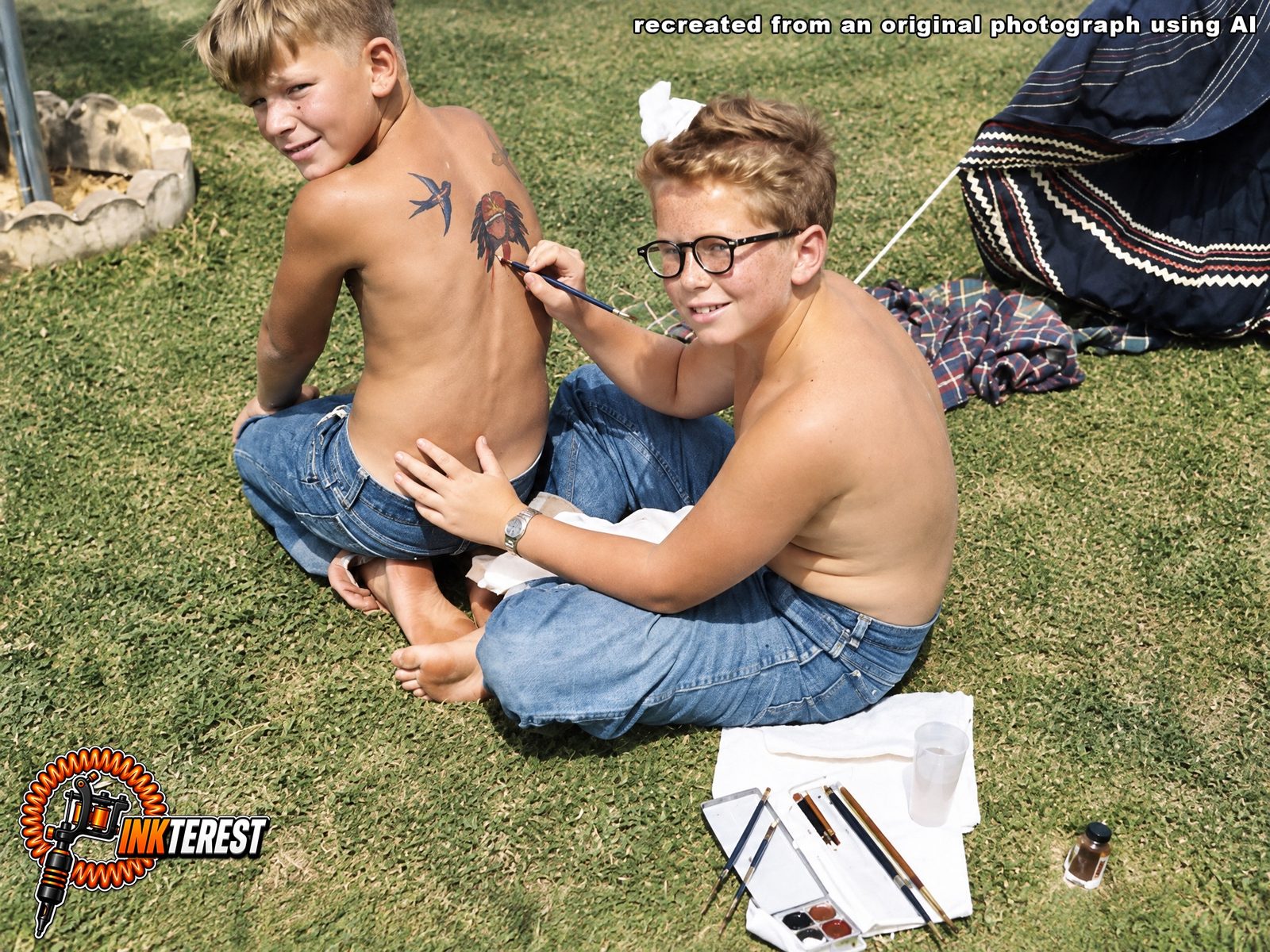
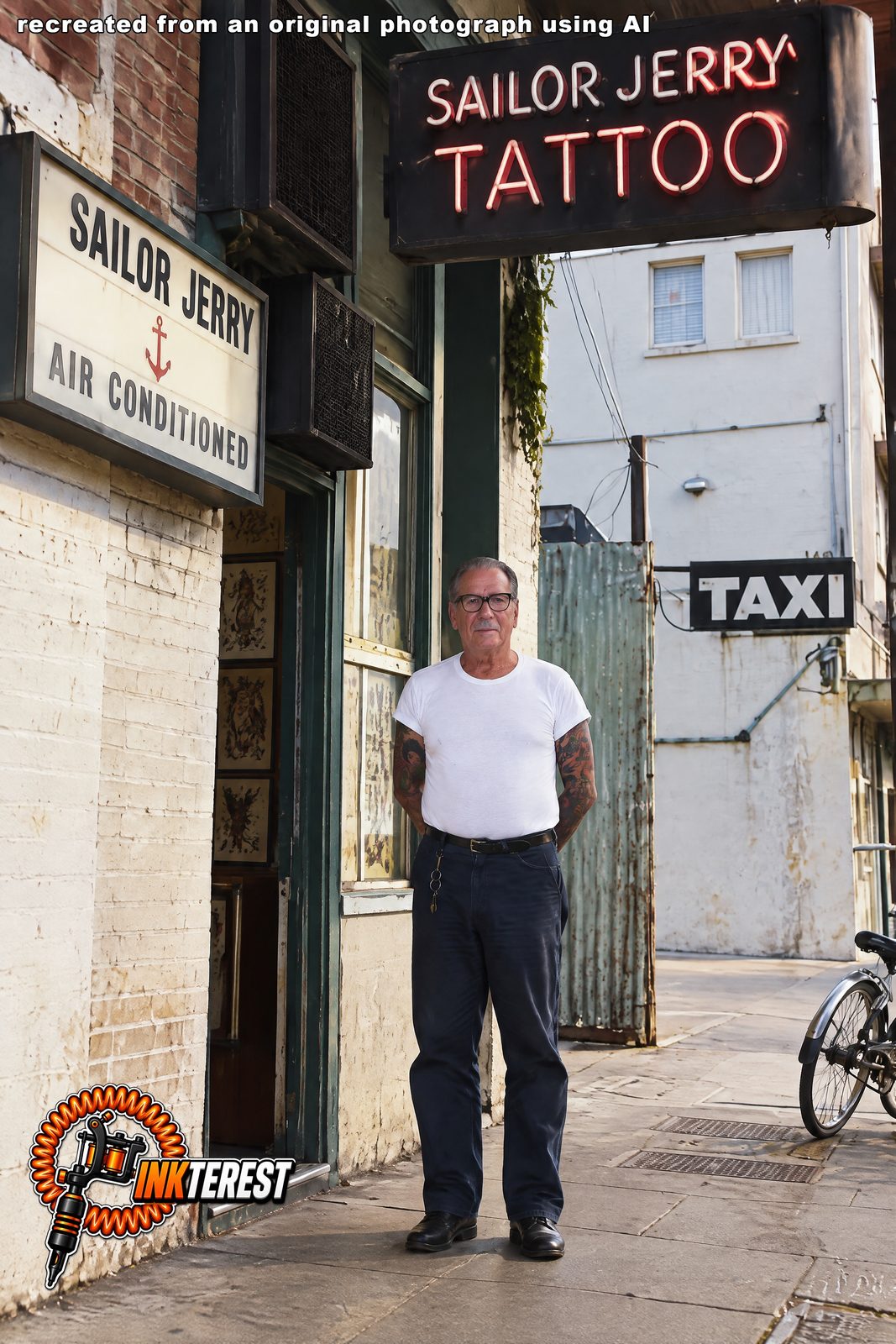
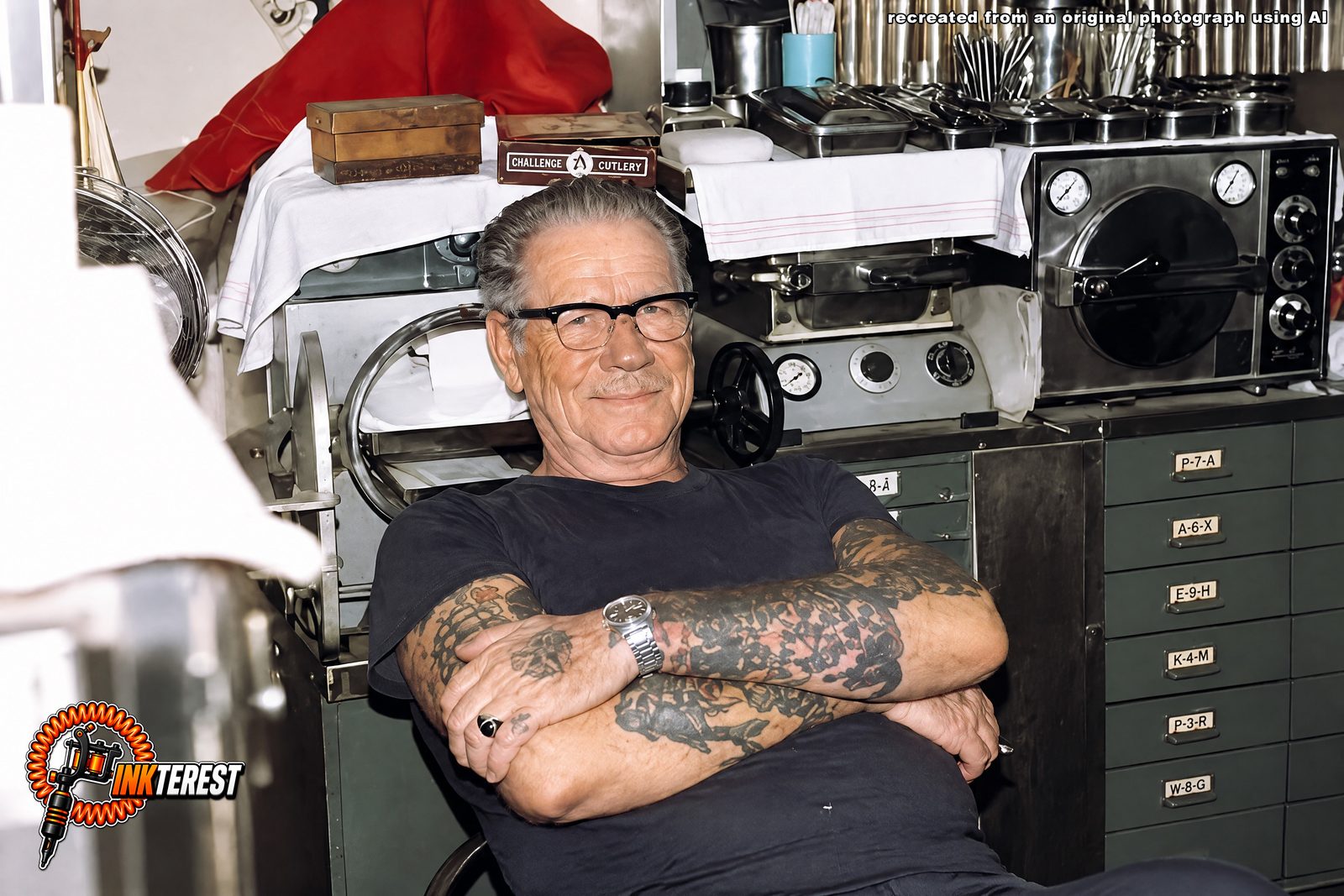
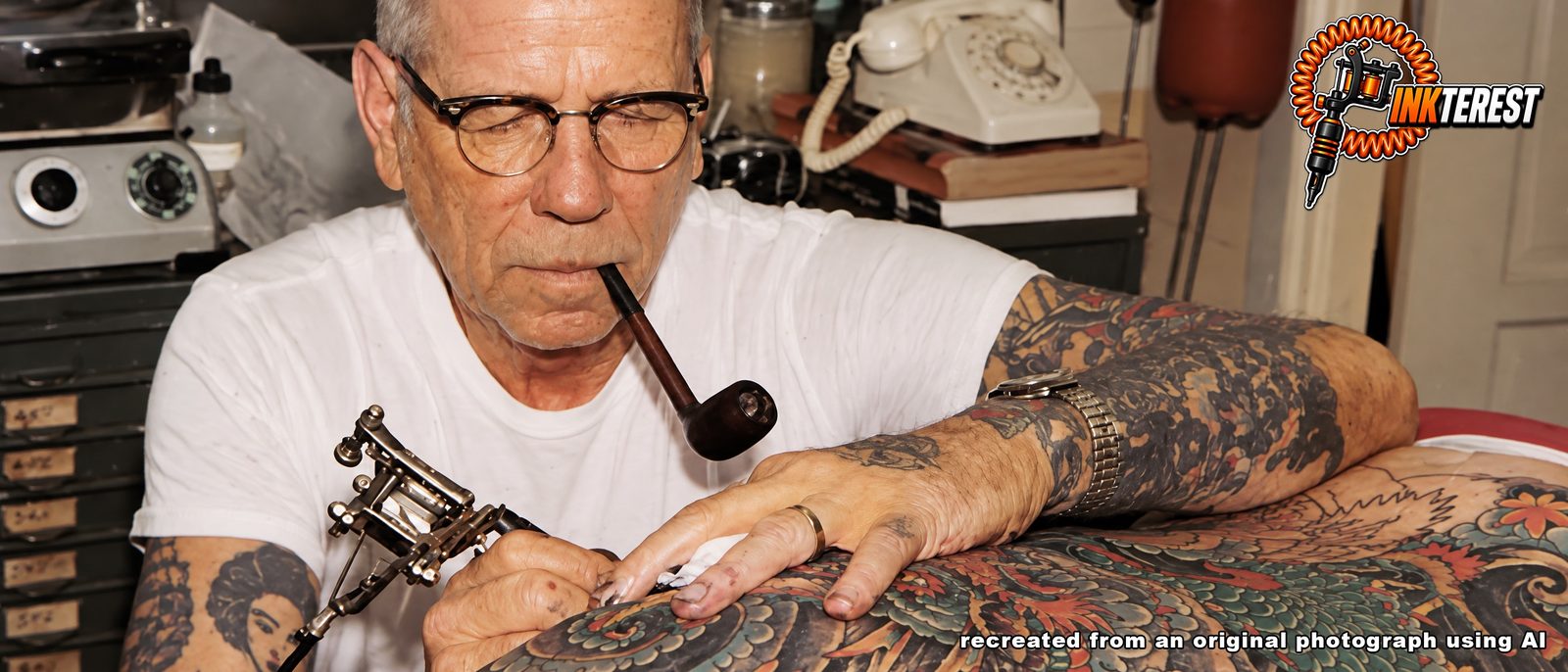
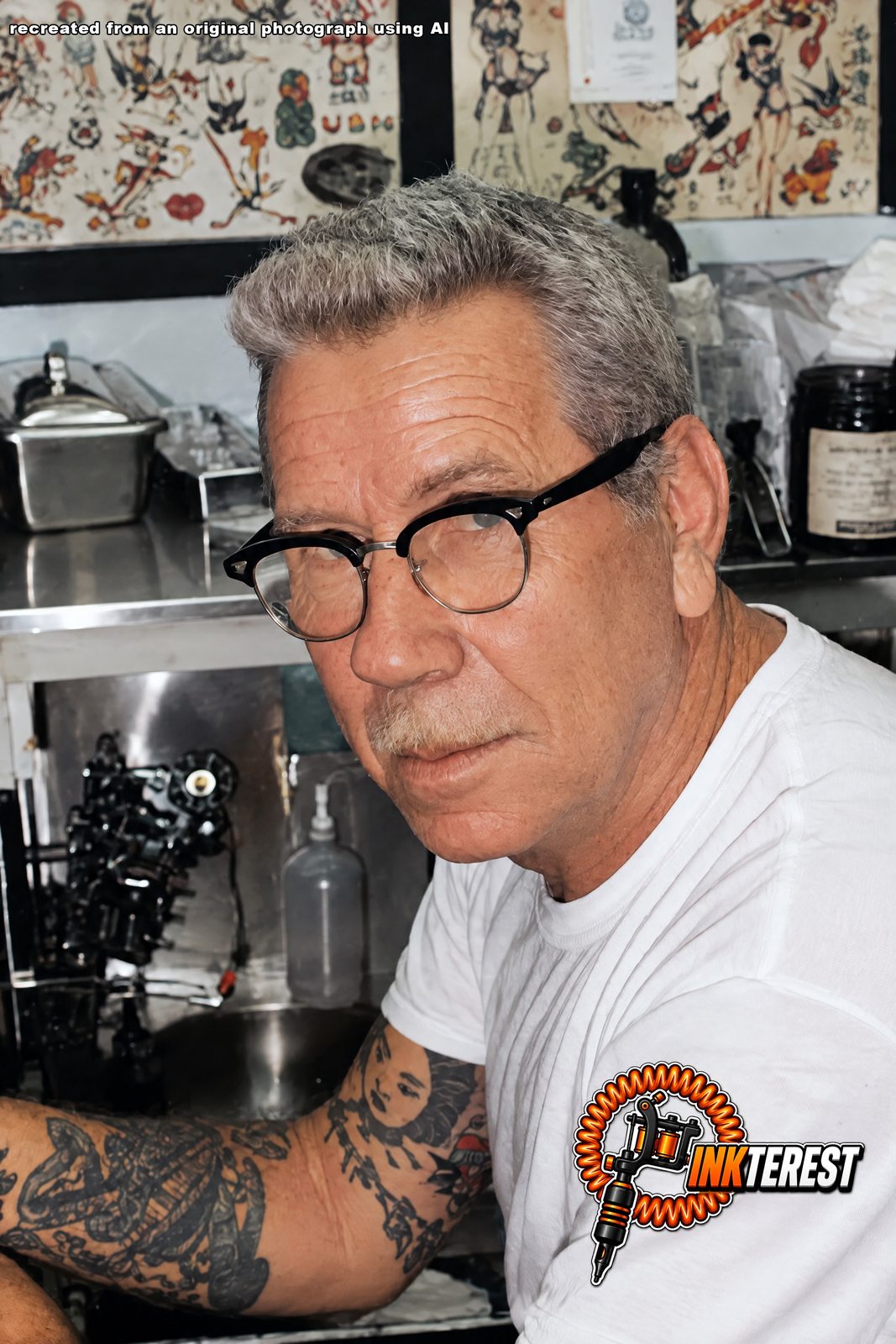
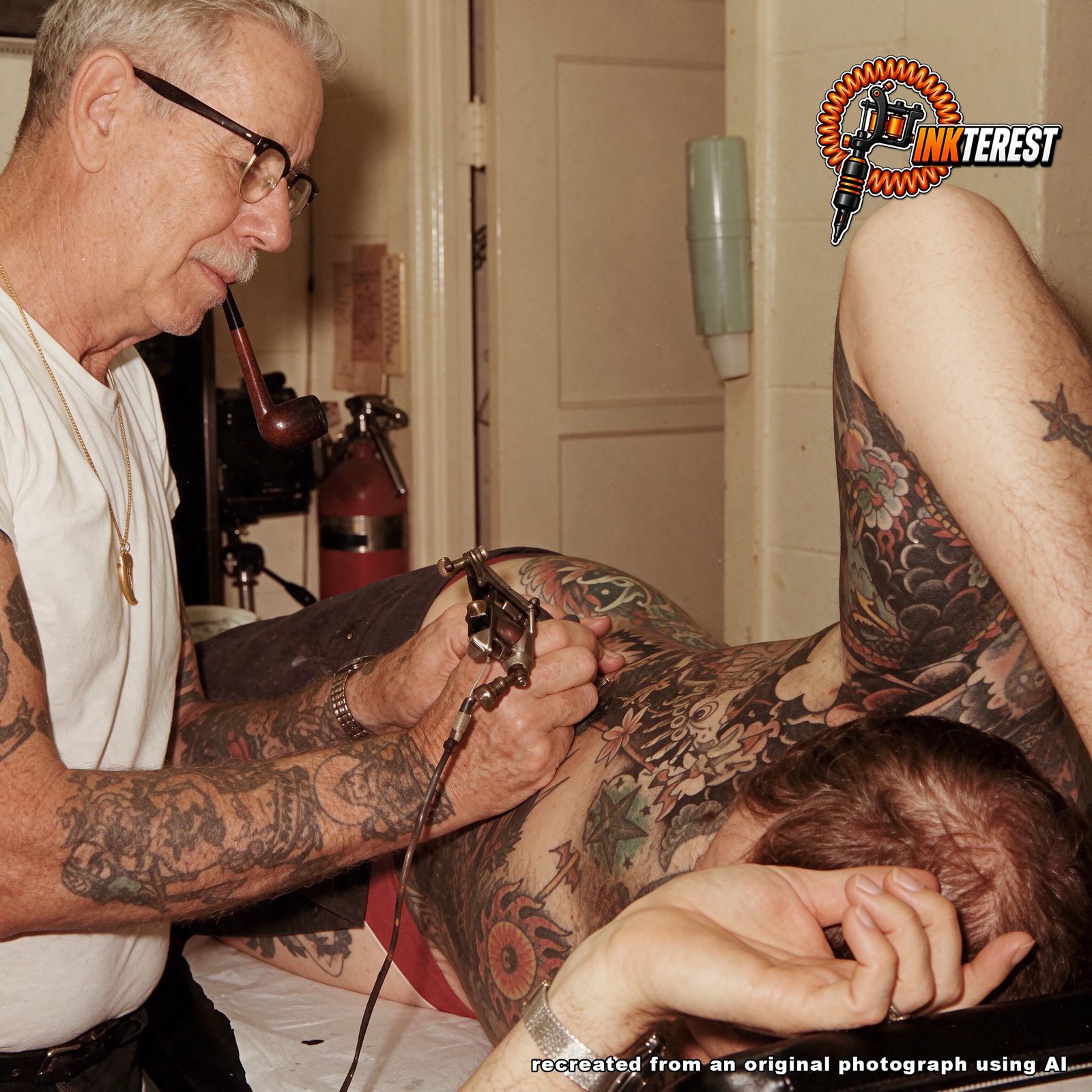
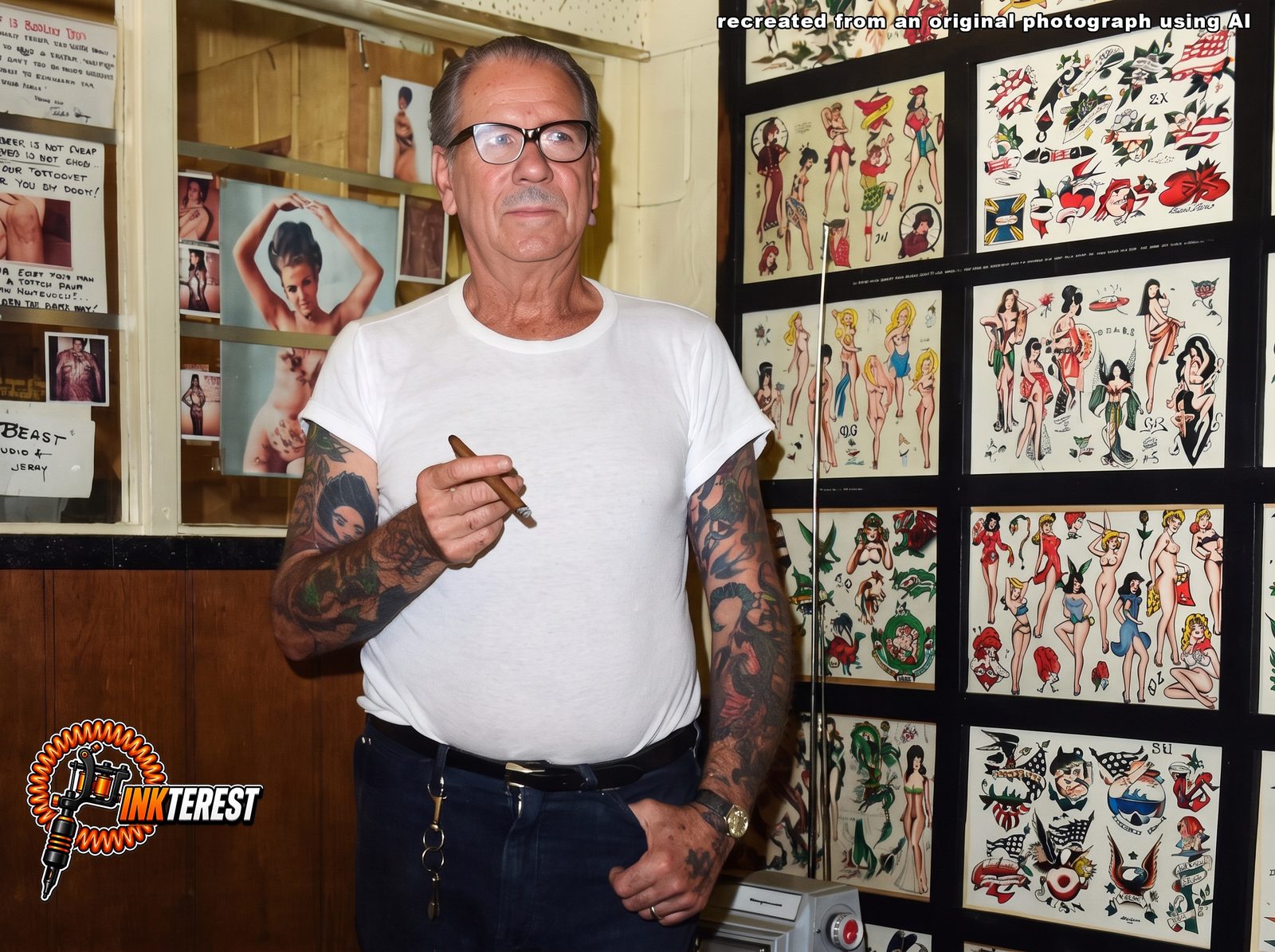

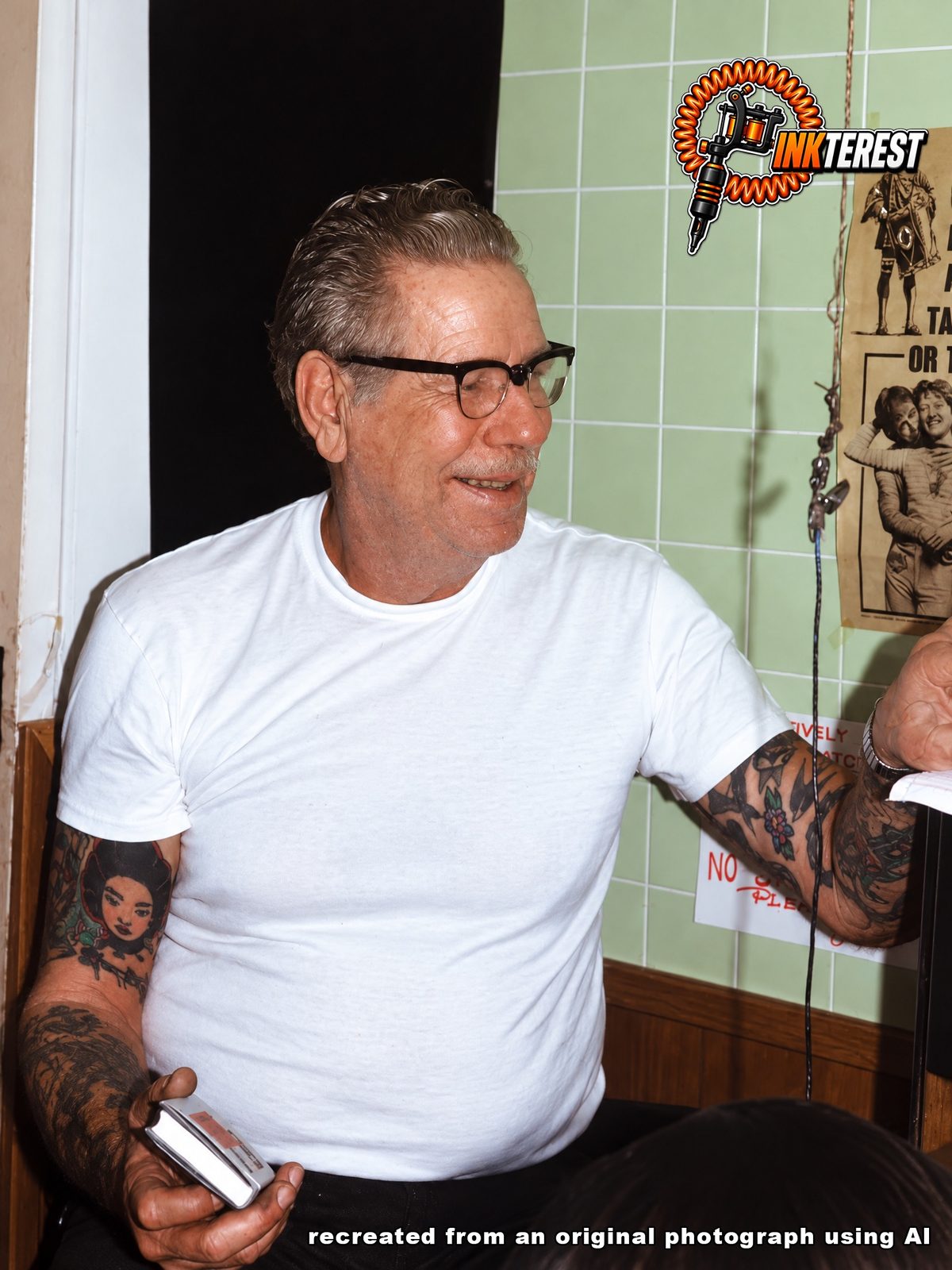
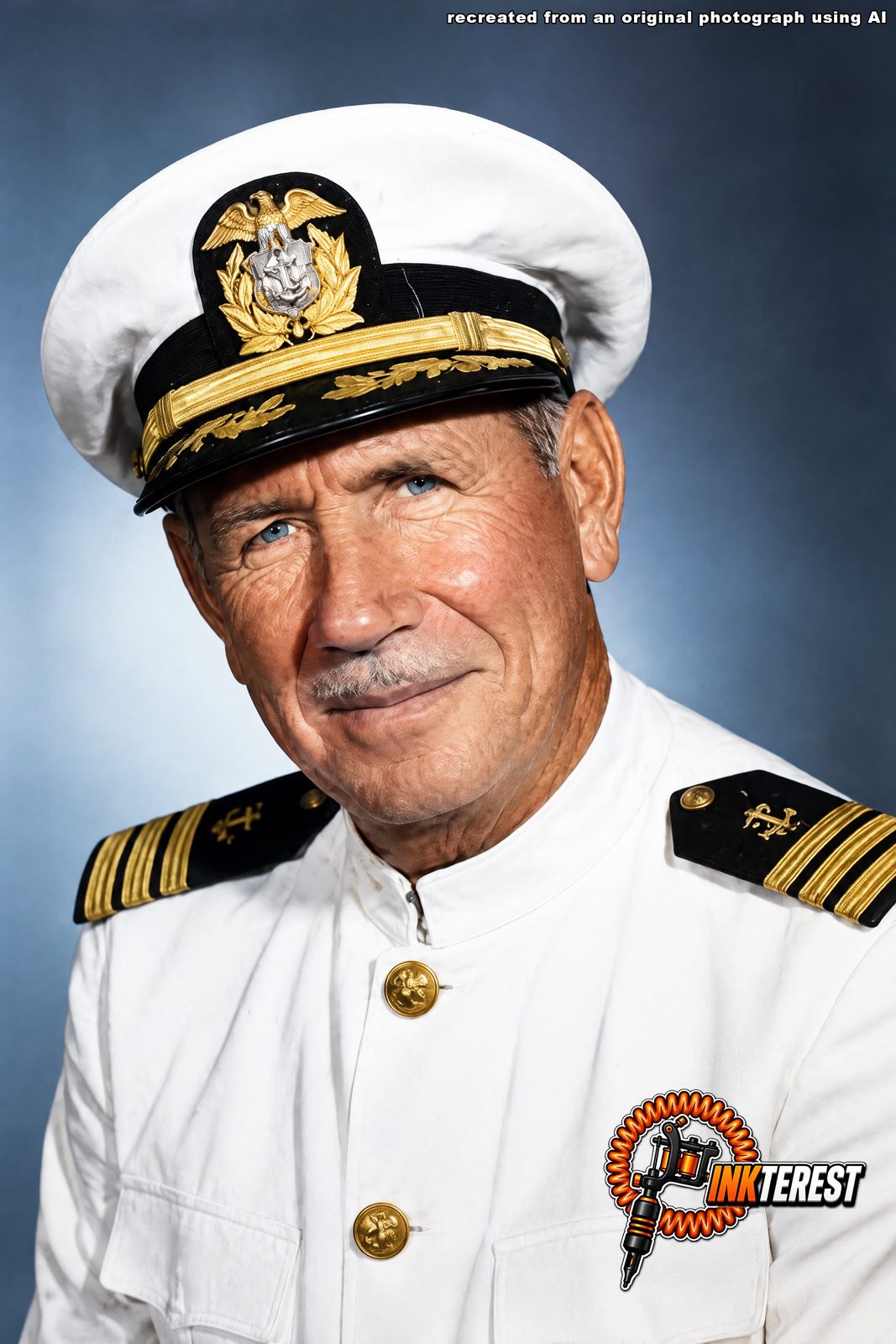
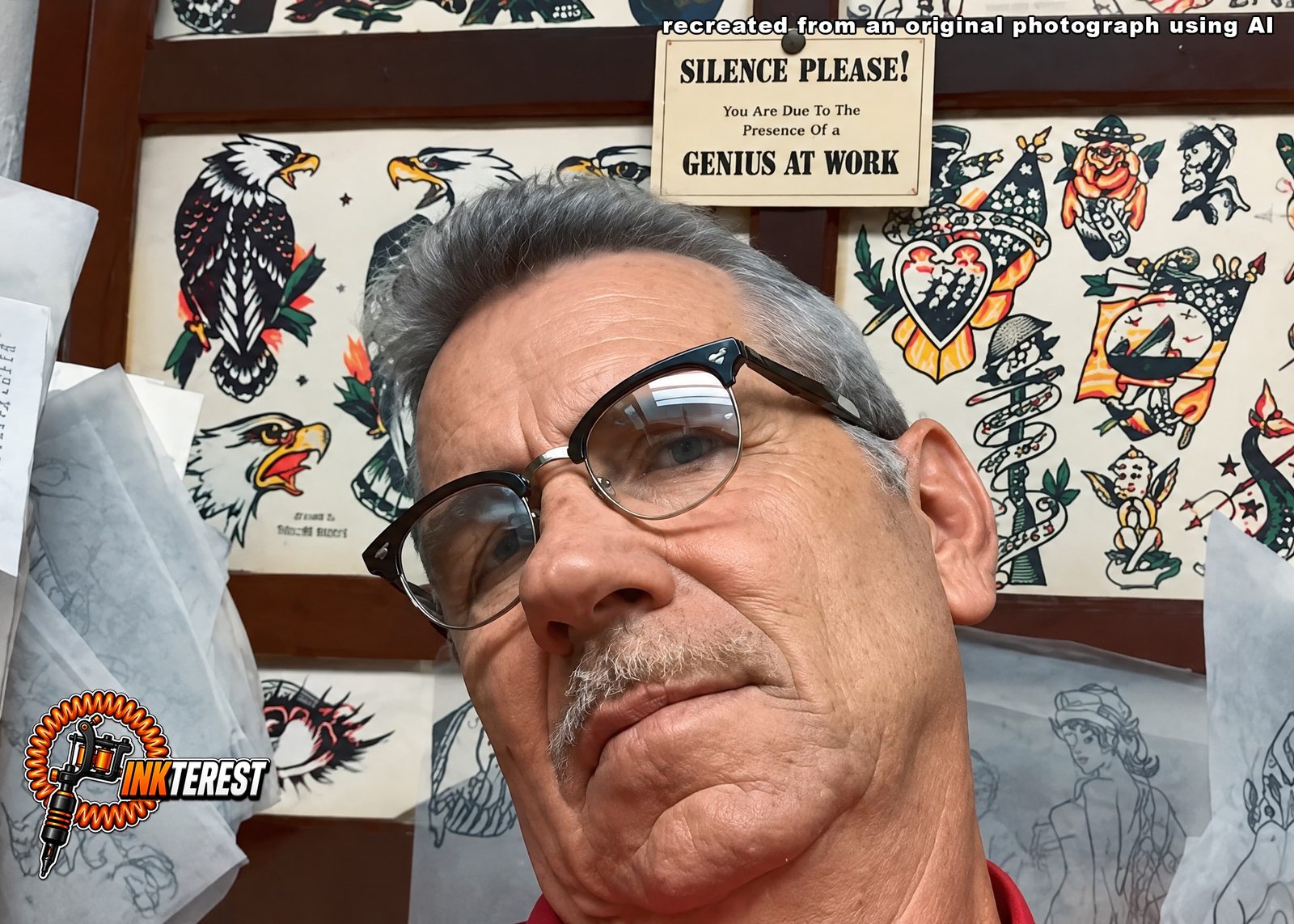
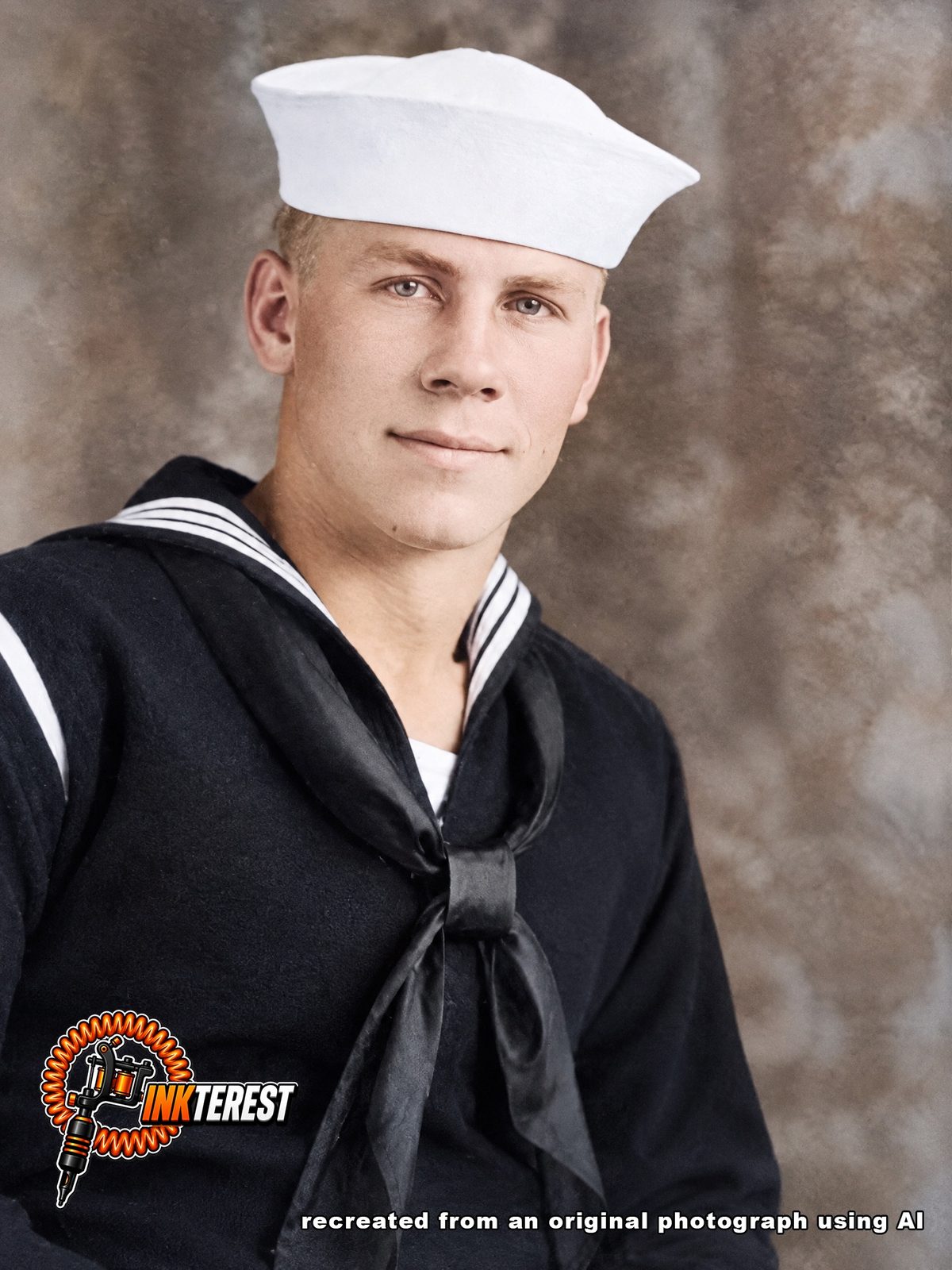
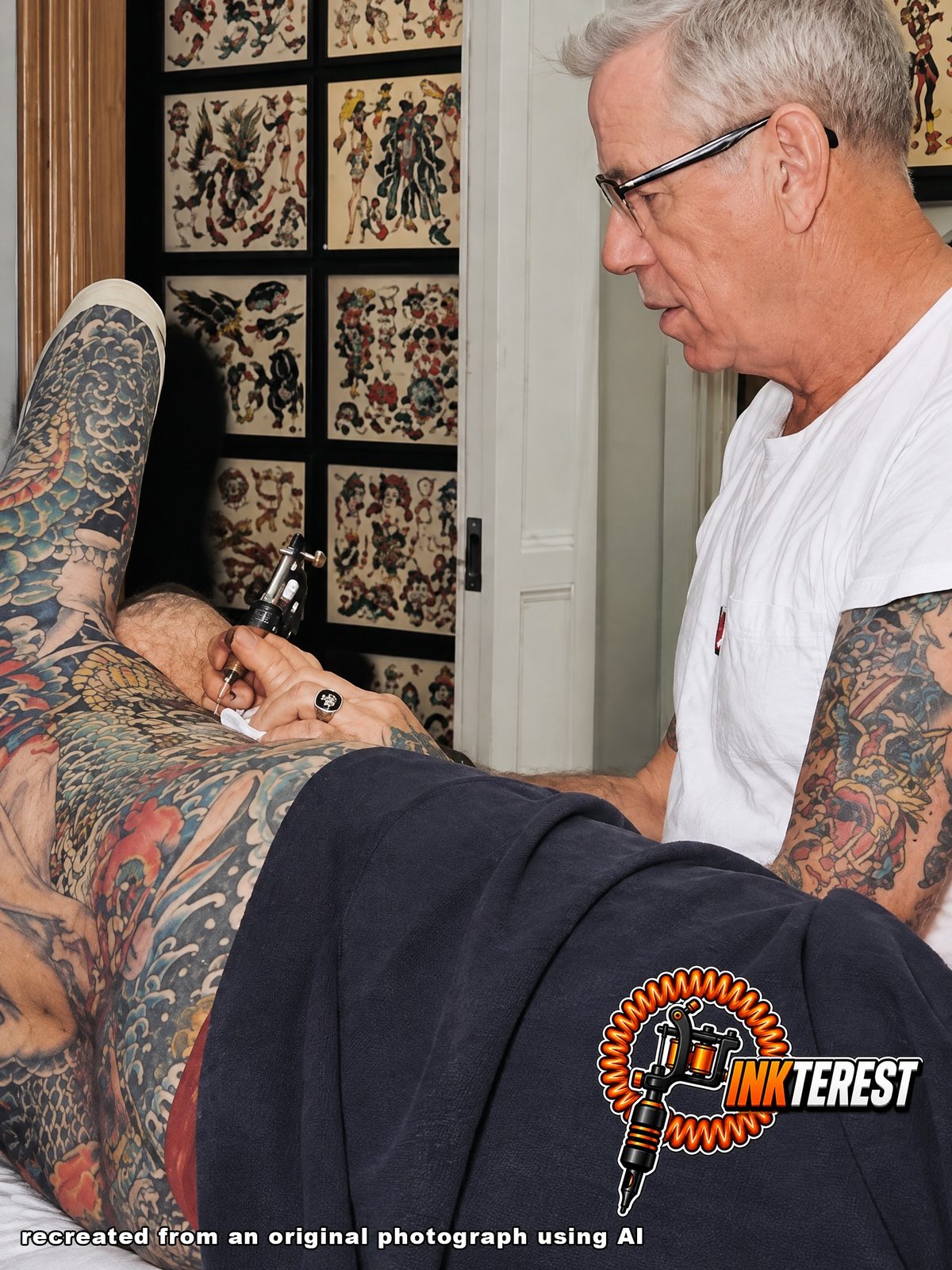
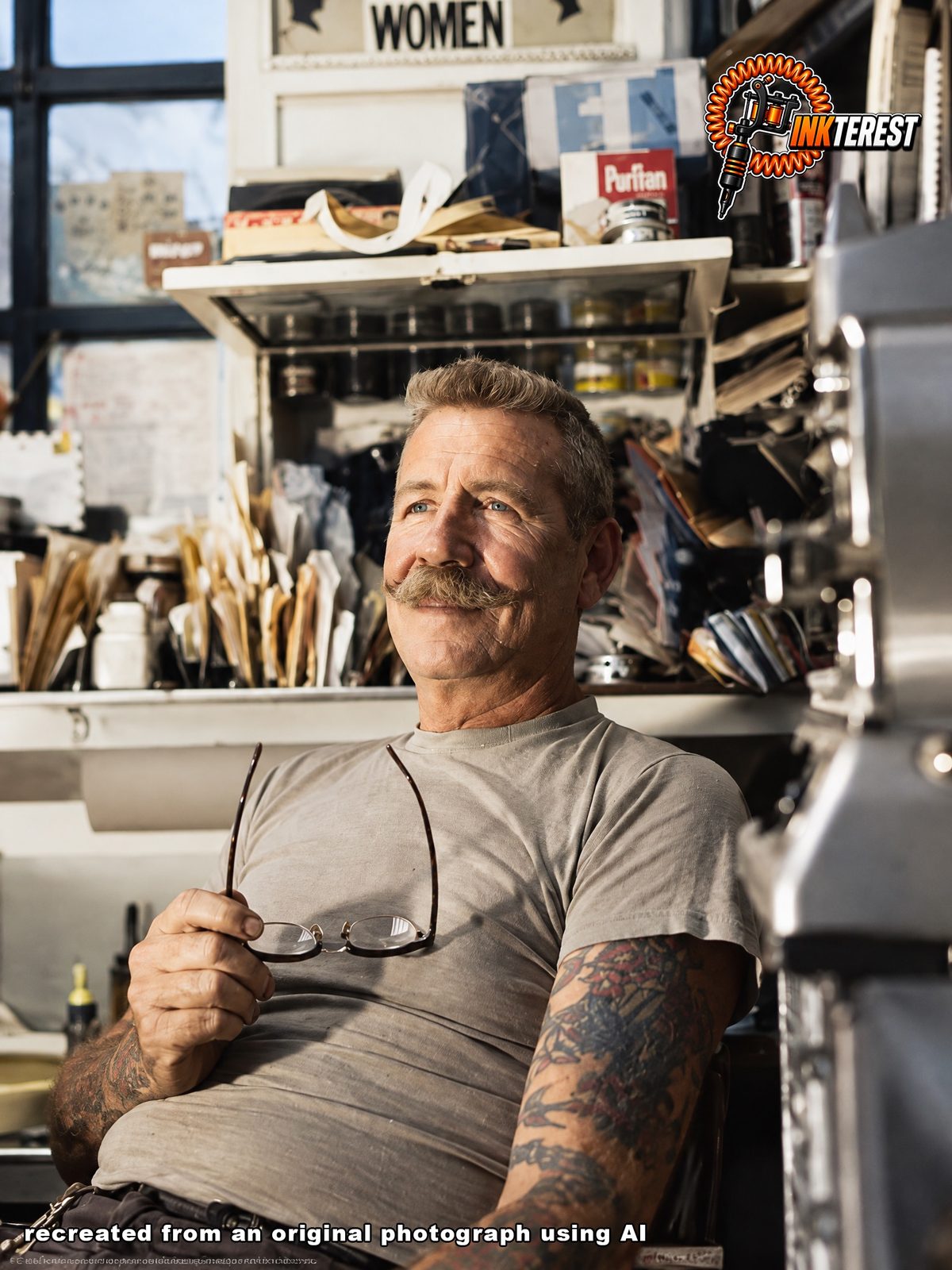
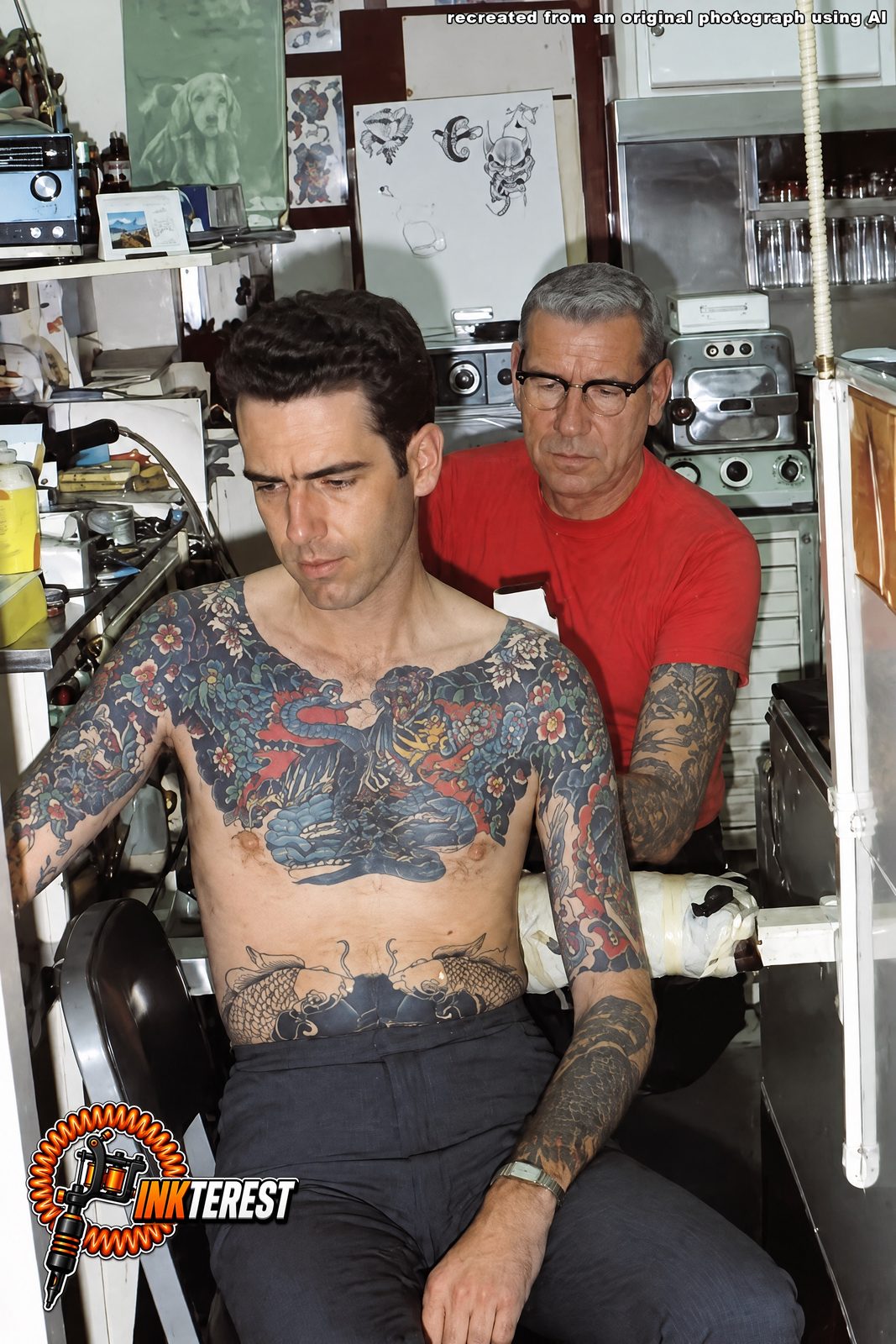
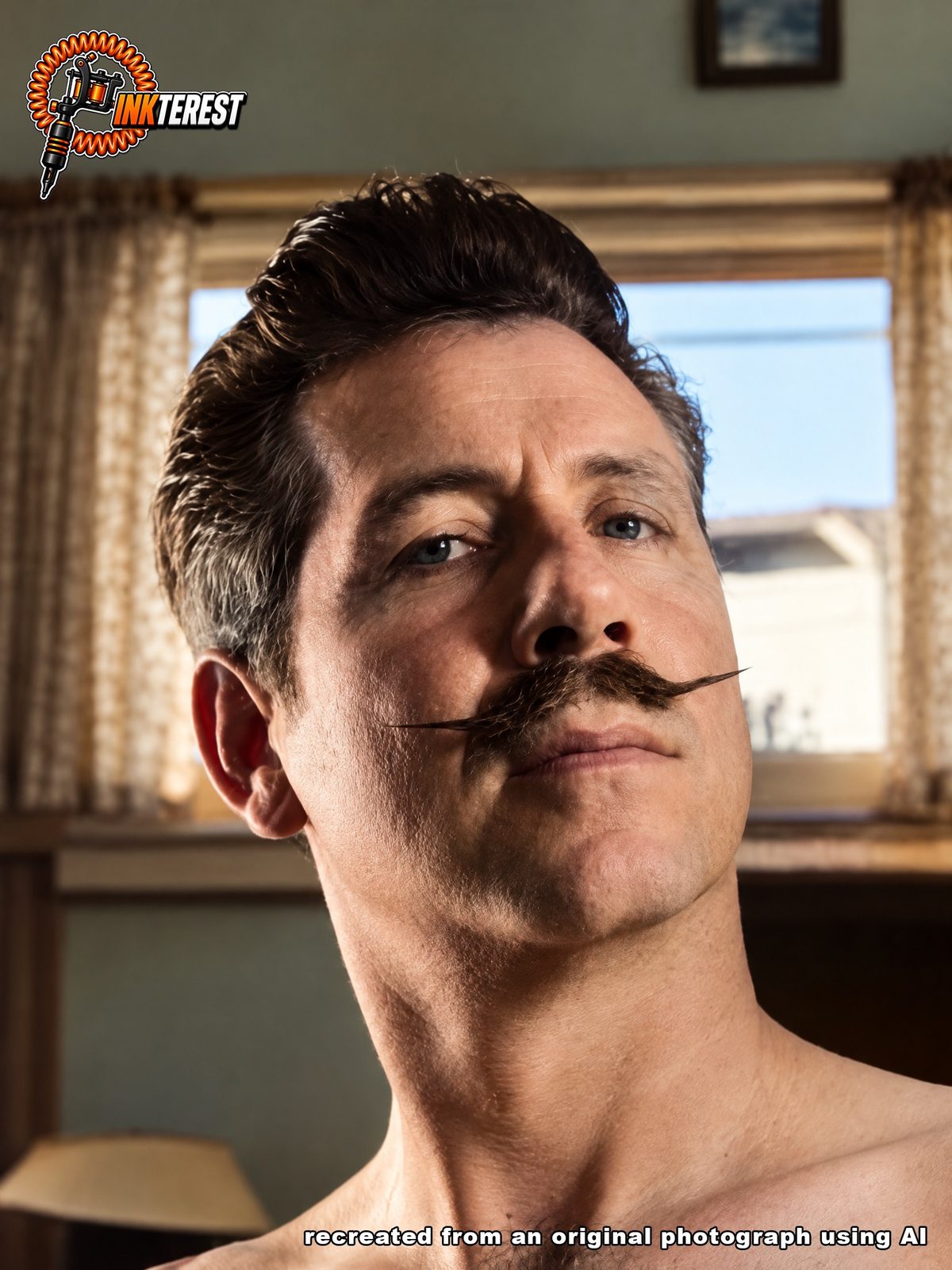
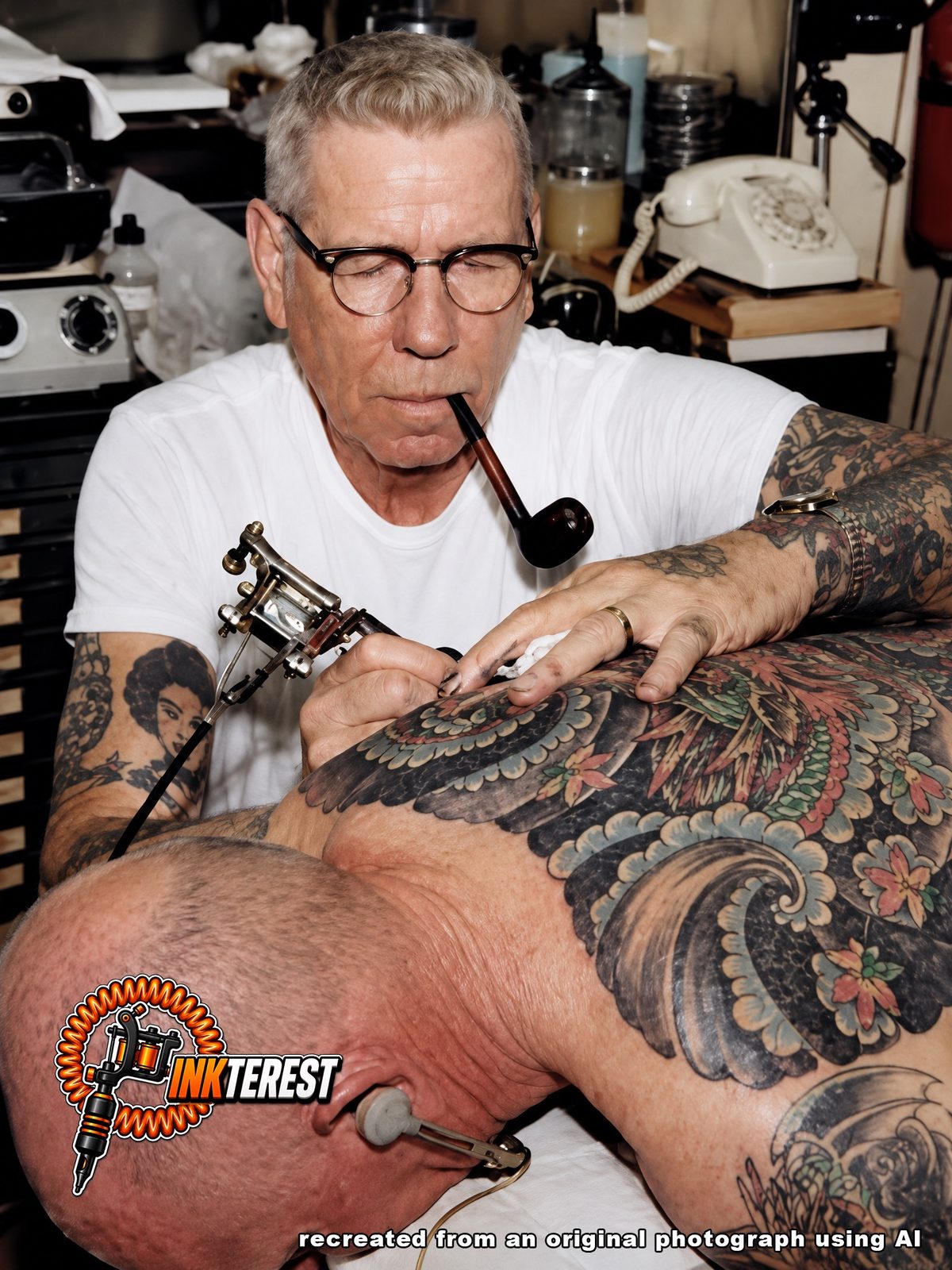
The pictures. We found these old photographs online and recreated them with AI: they are reconstructions, not the original photos. Tap one to open it, then swipe or use the arrows to go through them.
Freight trains and Chicago
INKterest: You were born in Reno in January 1911 and grew up in Northern California. How does a boy from there end up with a tattoo needle in his hand?
Sailor Jerry: By leaving home early. As a teenager I rode freight trains from one end of the country to the other and tattooed the old way, by hand: a needle, some ink and anybody who would sit still. In Chicago, at the end of the twenties, I met Gib “Tatts” Thomas, and he put an electric machine in my hand. I always called him my first teacher in electric tattooing. We kept writing to each other for the rest of his life, and in 1969 he came all the way out to see me in Honolulu.
INKterest: Who did you practise on?
Sailor Jerry: On whoever Skid Row sent through the door — drunks, mostly. A man who has had enough to drink holds still and doesn't argue about your lines. It's not a pretty story, but that's how a lot of us learned.
INKterest: And the name? “Sailor” is clear enough.
Sailor Jerry: The story goes that my folks named me Jerry after a donkey we had. Stubborn, the pair of us. I've never argued with it.
The Navy and the East
INKterest: Then you joined the Navy.
Sailor Jerry: At nineteen. The Navy took me across the Pacific and into the ports of Asia, and that's where I saw what tattooing could be. Over there a tattoo wasn't a little picture stuck on an arm. It was one design for a whole back, with a dragon that moved like it meant it. I came home with my eyes open, and I settled in Hawaii in the thirties.
Hotel Street
INKterest: What was Honolulu like for a tattooist?
Sailor Jerry: Bars, pool halls, shooting galleries and a tattoo shop wherever the rent could be paid — Hotel Street, and later my place on Smith Street in Chinatown. Then came December 1941, and it seemed the whole Pacific Fleet passed through. I was thirty and went to sign up again; the doctors listened to my heart and sent me home. So I served the way I could. Nine customers in ten were in uniform.
INKterest: What did they ask for?
Sailor Jerry: What a sailor wants. A swallow for every five thousand miles at sea, an anchor, a ship under full sail, a hula girl, a pig and a rooster on the feet so he wouldn't drown. They picked from the flash on the wall, and I put it on fast and clean. A design on that wall had to do its own talking: “If a design is good enough, it will find its own buyer. We don't have to sell it.” (letter, 28 June 1971)
What the swallow, the anchor, the pig and the rooster stood for is in our article on tattoo meanings.
Colours and clean needles
INKterest: You're remembered for new colours.
Sailor Jerry: What you could buy back then was thin, and there wasn't much of it, so I mixed my own pigments. And I'll say it as I wrote it: “I was the first one to start using purple, white, yellow and blue — now they are all trying to do it.” (letter, 18 February 1971)
INKterest: And hygiene? Not every shop of your day was careful.
Sailor Jerry: My shop was one of the first to put its tools through an autoclave, and a needle went into one customer and no other. A boy trusted me with his skin. The least I could do was not send him back to his ship with an infection.
INKterest: What makes a good design?
Sailor Jerry: “Bold simplicity is the keynote to good design.” (letter, 20 November 1970) A heavy black outline, a few strong colours, a shape you can read from across a bar. That's why the old designs still look like something years later, while the fussy ones go to mush.
Why bold lines hold up: every line softens and spreads a little over the years — see how tattoos age.
Letters to Japan
INKterest: For years you wrote to tattoo masters in Japan, among them Kazuo Oguri, the Horihide of Gifu. How did a Navy man in Honolulu come to that?
Sailor Jerry: Through a translator, and through stubbornness. Their work was the finest anywhere, and nobody from outside had been let in. I sent them my tracings and photographs, they sent me theirs, and we traded what we knew. The masters there take “hori” into their names — it comes from the word for carving. So I signed myself Hori Smoku. “There are millions of skins, but only one Hori Smoku.” (letter, 28 June 1971)
INKterest: After Pearl Harbor you held a grudge against Japan for years. Wasn't that a contradiction?
Sailor Jerry: I never forgave the attack, and I never stopped admiring the art. A man can carry both. I learned from their prints, and from their comics too: “I have been studying Japanese comic books — some of these guys can really portray motion and action.” (letter, 20 July 1971) If something is done better than I do it, I'm going to learn it, whoever did it.
More than one tattooer has worked as Horihide. Sailor Jerry's was Kazuo Oguri of Gifu (Defector); Hideo Kakimoto of Yokosuka is another, and we imagined an interview with him too.
The young ones
INKterest: Ed Hardy, Mike Malone, Zeke Owen — you wrote to all of them.
Sailor Jerry: Pen and paper. Rubbings of new designs went into the envelope, which was how we traded ideas then. Hardy wanted to learn the Japanese way, so I put him in touch with Oguri, my Horihide in Gifu. And it was Hardy I told: “There has always been a sort of hypnotic fascination about tattooing.” (letter, 27 December 1971)
INKterest: Were you a patient teacher?
Sailor Jerry: “I'm always willing to listen to somebody else's ideas… because we can always learn more.” (letter, 12 August 1971) But listening isn't taking orders: “If you like my style of work, fine, come to me, but if you want to make me over into your kind of stylist, forget it!” (letter, 12 July 1972)
INKterest: What did you tell them about copying?
Sailor Jerry: “You must understand the feeling of originating as opposed to imitating.” (letter, 8 June 1971) The trade has always had its share of people who take what others built. As I put it to Hardy: “It's the old story, we build up the demand and the bums cash in on it.” (letter to Ed Hardy) And to anyone who thought he'd arrived: “In this business, the minute you get to thinking you're top dog, you quit trying and are on the way out fast.” (letter, 24 May 1971)
Old Ironsides
INKterest: Tattooing wasn't all you did.
Sailor Jerry: Not by a long way. I played saxophone in a dance band. I held captain's papers, and in the fifties I skippered a tour boat out to the Pearl Harbor memorial. I studied electronics and got a first-class radio licence. At the end of the sixties I had a late-night show on the radio as Old Ironsides, and the government got what it had coming.
INKterest: People say you were stubborn and sure of yourself.
Sailor Jerry: “I'm not a bit conceited, though I have every right to be!” (letter, 24 May 1971) And I'm my own hardest judge: “I am my own worst competitor and also my own most severe critic and it's a hell of a spot to be in!” (letter, 24 August 1971)
The last word
INKterest: What did you want done with the shop?
Sailor Jerry: It was to go to one of my boys: Hardy, Malone or Owen. If none of them would take it, it was to be burned to the ground. No stranger was going to sell my flash.
INKterest: Your best work?
Sailor Jerry: “I haven't done my best yet… only my best so far.” (letter, 15 September 1969)
INKterest: And all the legends about you?
Sailor Jerry: “People are only supposed to believe the legends not understand them.” (letter, 18 August 1971)
What came after
Norman Collins died in Honolulu on 12 June 1973, by most accounts after a heart attack while riding his motorcycle, and he is buried at the National Memorial Cemetery of the Pacific. Mike Malone bought the shop at 1033 Smith Street, which became China Sea Tattoo, and that same year Ed Hardy went on to work with Kazuo Oguri, Horihide, in Gifu. In 1999 Hardy and Malone set up Sailor Jerry Ltd., which holds the rights to his flash and letters; his name went on a spiced rum, owned since 2008 by William Grant & Sons, and his widow's dispute over those rights was settled in 2020.
Not everything about him reads well today. He was proudly conservative, scornful of hippies and of tattooists who chased publicity, and the grudge he held after Pearl Harbor reached Japanese people as well as the attack. We haven't put words in his mouth that his record doesn't support, in either direction. His work is the part that lasted: the bold, clean, readable designs now called old school or American traditional (tattoo styles explained).
Watch the film
Hori Smoku Sailor Jerry, the 2008 documentary directed by Erich Weiss, is one of the sources of this interview. Here is the whole film, about 75 minutes, in English, from the TattooNOW channel on YouTube. YouTube's player loads only when you press play.

Try old school on
In his shop a sailor chose from the flash on the wall. In INKterest, Tattoo Styles holds Old School, Neo-Traditional and Japanese Irezumi among its 250 styles, with 100 designs in each (the full list). Try a swallow or an anchor on a photo of your own body, or live through the camera, before you take it to an artist.
- Eldridge C. Norman Keith Collins. Tattoo Archive.
- Wikipedia. Sailor Jerry.
- Corcoran M. Stewed, screwed and tattooed: the selling of Sailor Jerry. Includes Collins's letters to Ed Hardy.
- Sailor Jerry. Quotes and letters. Dated quotes from Collins's letters, 1969–1972.
- Hori Smoku Sailor Jerry (documentary, 2008). Behind the legend of Sailor Jerry, an interview with the director, Erich Weiss.
- The Manual. The real Sailor Jerry.
- Taylor C. Ed Hardy went to Japan and brought back a myth. Defector, 11 August 2021. On Kazuo Oguri, the Horihide of Gifu.
This interview is imagined: Norman Collins never gave it. The words in quotation marks with a date are his own, from his letters; the rest of his answers are our reconstruction from the sources above. INKterest is not affiliated with Sailor Jerry Ltd., William Grant & Sons or Collins's estate.
Try old school on
INKterest is free to download for iPhone, with 9 free try-ons and no account. INKterest Pro unlocks unlimited try-ons.